

Ultherapy: Which Areas Can Be Treated?


Dr Patricia Yuen
BA (Brown), MD (Boston), Internal Medicine (USA), FAMS (Dermatology)
Accredited Dermatologist with the Ministry of Health, Singapore
A slightly lower brow, less definition along the jawline or looser skin beneath the chin can subtly change the appearance of the face over time. These changes may appear in different places and affect the overall facial profile in different ways.
This is where the versatility of Ultherapy comes into the picture. Rather than being limited to one part of the face, the treatment can be used across several areas, with each one presenting different concerns and treatment goals.
For those considering Ultherapy treatment in Singapore, knowing which areas can be treated can help you better understand what the procedure may be able to address. Below, we look at the key treatment areas and what Ultherapy aims to achieve in each.
What Can Ultherapy Do in Different Treatment Areas?
Ultherapy does not pursue the same result in every area. Depending on where skin laxity occurs, the intended effect may range from a subtle lifting effect around the brow to firmer-looking contours along the lower face or smoother-looking skin across the décolletage.
Forehead, Brows and Around the Eyes
Treatment across the upper face may be used to address mild laxity around the brow. As collagen develops, Ultherapy may produce a subtle lifting effect around the brow and improve the appearance of mildly lax skin.
Cheeks, Mouth and Lower Face
Across the cheeks and lower face, Ultherapy may improve mild laxity and support firmer-looking facial contours. Firming the skin around the lower cheeks and mouth may also create a smoother transition towards the jawline.
Jawline, Jowls and Under the Chin
Ultherapy can target lax skin along the lower cheeks, jowls and beneath the chin where facial definition has begun to soften. Treatment may improve the appearance of early jowling and support a more defined-looking jawline.
Neck
On the neck, treatment may be used for lax or crepey skin. Gradual collagen production may improve firmness and smoothness while supporting the contour between the jawline and neck.
Décolletage and Upper Chest
Across the décolletage, or upper chest, the treatment goal may focus more on skin firmness and texture than lifting. Collagen stimulation may help soften the appearance of fine lines and wrinkles and create a smoother-looking surface.
Why Does Ultherapy Treatment Differ by Area?
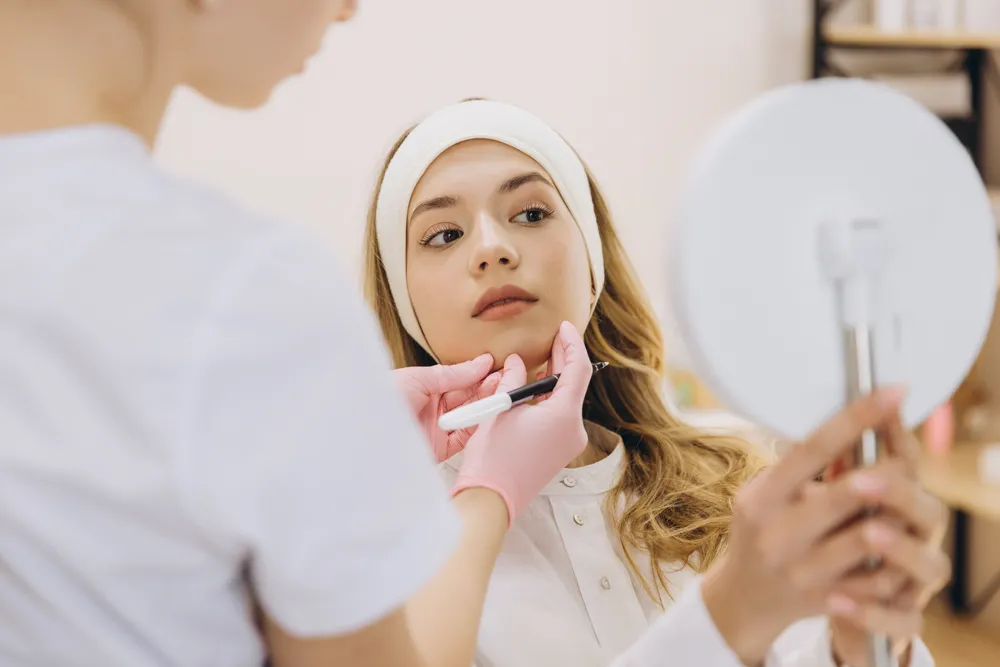
Although the same Ultherapy technology may be used across different areas, treatment is not applied in exactly the same way everywhere. Skin thickness, underlying anatomy, the location of laxity and the intended effect can all influence how treatment is planned.
Skin Thickness and Anatomy
Skin thickness and the position of underlying tissue layers vary across the face, neck and décolletage. The brow, for example, presents different anatomical considerations from the fuller cheek or thinner neck. These differences help determine the appropriate treatment depth, placement and coverage for each area.
Treatment Depth and Ultrasound Visualisation
Microfocused ultrasound energy can be delivered at selected tissue depths according to the area being treated and the intended effect. Ultherapy provides real-time ultrasound visualisation, allowing the practitioner to view tissue layers and guide energy placement during treatment.
Treatment-Line Placement and Coverage
Treatment lines are planned according to where laxity occurs and how far it extends. Mild laxity around the brow may require relatively focused coverage, whereas laxity extending across the lower face, jawline and neck may involve a broader treatment area.
Neighbouring areas may therefore be considered together rather than treated as completely separate zones. For example, the lower face, jowls, jawline, area beneath the chin and neck contribute to one continuous contour. Where laxity affects several of these areas, treatment planning may account for their relationship to one another.
Concerns That May Need a Different Approach
Being within an Ultherapy treatment area does not necessarily mean that every concern in that area can be addressed with Ultherapy. The treatment primarily targets skin laxity through collagen stimulation, so another or additional treatment may be considered for concerns such as:
- Under-eye bags, dark circles or excess eyelid skin
- Hollow cheeks or lips caused by volume loss
- A double chin caused mainly by excess fat
- Pigmentation, enlarged pores or acne scarring
- Significant loose or excess skin
- Pronounced skin laxity that may require a greater degree of lifting
An assessment can help establish whether a concern is primarily related to skin laxity or another factor that Ultherapy does not directly address.
Planning Your Ultherapy Treatment With Dr Patricia Yuen
Ultherapy can be used across several areas, but treating more areas does not necessarily produce a better result. The treatment plan should instead focus on where skin laxity is present, which areas are likely to benefit and how neighbouring areas contribute to the overall facial or neck contour.
When several concerns are present, treatment may prioritise the areas most likely to contribute meaningfully to the intended outcome. Depending on the assessment, suitable areas may be treated during the same session or approached separately.
Patricia Yuen Dermatology provides individualised assessment and treatment planning within a dedicated dermatology setting. Dr Patricia Yuen assesses the location and degree of skin laxity, treatment goals and suitability before recommending which areas, if any, may benefit from Ultherapy. Book an appointment to discuss whether Ultherapy may be appropriate for you.
FAQs About Ultherapy Treatment Areas
Does treating several areas affect appointment length?
Can the face and neck be treated with Ultherapy in the same session?
How many sessions are usually needed when treating multiple areas?
Meet Our Doctor
Dr Patricia Yuen
BA (Brown), MD (Boston), Internal Medicine (USA)
FAMS (Dermatology)
Accredited Dermatologist with the Ministry of Health, Singapore
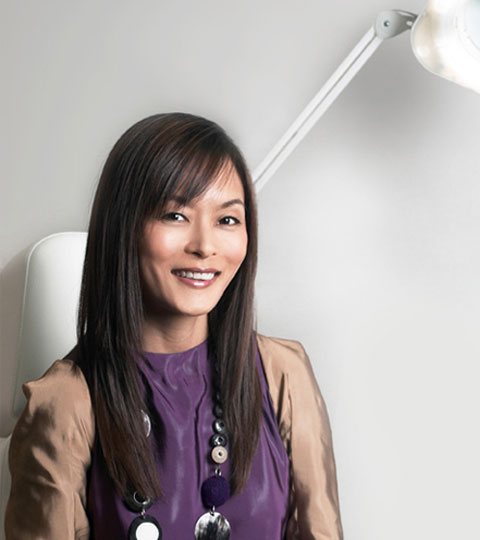
Dr Patricia Yuen is a US-trained dermatologist with over two decades of clinical experience in both medical and cosmetic dermatology. She is an active member of several professional bodies, including the Dermatological Society of Singapore, the American Academy of Dermatology, and the American Society for Laser Medicine and Surgery.
At her private practice—Patricia Yuen Dermatology, located at Paragon—she offers personalised skincare solutions. While she treats a wide range of skin conditions, Dr Yuen has a particular focus on cosmetic dermatology, helping patients enhance their skin health and appearance through tailored treatments.

